
Call Reduction Strategies for Contact Centers (2025)

Contact centers face an intensifying paradox: customer expectations for instant service continue rising while operational budgets face unprecedented pressure. Inbound voice interactions now represent 55.4% of all customer contacts, actually increasing from 53.5% just two years ago despite massive digital transformation investments. With 77% of customers expecting immediate connection when they contact a company and 90% demanding instant responses to service questions, contact centers operate under relentless volume pressure.
The financial stakes are severe. Companies risk losing $3.7 trillion in global sales from poor customer experiences, while 28% of customers abandon calls after waiting just five minutes. More troubling, 20 to 30% of all call volume stems from repeat contacts about previously unresolved issues, meaning contact centers are handling thousands of avoidable calls generated by their own operational inefficiencies. Each phone interaction costs significantly more than digital alternatives, creating unsustainable economics as volume scales.
However, leading organizations are achieving dramatic results through strategic call reduction. Telecommunications providers implementing AI-driven strategies report 30% decreases in call volume, while businesses deploying chatbots resolve up to 80% of routine inquiries automatically, cutting support costs by approximately 30% according to IBM research. With 70% of inbound calls now being answered by AI in advanced contact centers and 33.2% of organizations prioritizing volume reduction as their primary efficiency goal, the shift from reactive call handling to proactive volume management has become operational imperative.
This guide presents five proven strategies that reduce inbound call volume by 30% or more while maintaining or improving customer satisfaction. From AI-powered self-service and proactive communication to FCR optimization and intelligent routing, these approaches represent the operational blueprint for sustainable contact center success in 2025.
| Metric Category | 2025 Statistics & Impact |
|---|---|
| Current Contact Center Volume Reality | |
| Inbound Voice Contact Share | 55.4% of all customer interactions (up from 53.5% in 2022) |
| Customer Expectation for Immediate Response | 77% expect to reach someone immediately when contacting company |
| Demand for Instant Service Resolution | 90% of customers expect immediate response to service questions |
| Call Abandonment Rate | 28% of customers abandon calls after 5 minutes or less on hold |
| Economic Impact of Call Volume | |
| Global Sales at Risk from Poor CX | $3.7 trillion in potential lost revenue from bad customer experiences |
| Repeat Call Volume | 20 to 30% of all calls are about unresolved issues requiring repeat contact |
| Failed FCR Due to Data Access Issues | 60% of failed first call resolutions stem from agent inability to access correct data |
| Navigation Difficulty | 67% of consumers find it difficult to navigate call center phone systems |
| AI Adoption in Contact Centers | |
| AI-Answered Inbound Calls | 70% of calls in leading contact centers now answered by AI (IBM) |
| Organizations Prioritizing Call Reduction | 33.2% identify reducing contact volume as primary AI goal |
| Chatbot Self-Service Adoption | 60% of customers have used chatbots for simple self-service needs (Salesforce) |
| Routine Question Resolution via Chatbots | Up to 80% of routine questions resolvable by AI (IBM) |
| Proven Call Reduction Results | |
| Telecom AI Implementation Results | 30% reduction in call volume after generative AI integration |
| Cost Reduction from Chatbot Implementation | Approximately 30% decrease in customer support costs (IBM) |
| FCR Impact on Call Volume | Each 1% FCR improvement reduces overall volume by 1 to 2% |
| Agent Training Impact on FCR | Regular training can improve FCR by up to 25% |
| First Call Resolution Standards | |
| Industry Average FCR Rate | 70 to 75% across contact centers |
| 2025 Leading Organization Target | 80%+ FCR rate benchmark for top performers |
| E-commerce FCR Achievement | 75% average FCR in e-commerce contact centers |
| Customer Channel Preferences | |
| Self-Service Preference When Effective | 81% prefer self-service over agent interaction when it works properly |
| Live Chat Growth | Increased from 7% to 7.2% of interactions (2022-2023) |
| SMS Support Growth | Grew from 1.3% to 1.6% of interactions |
| Social Media Support Growth | Expanded from 2.8% to 3% of total volume |
| Technology Adoption Rates | |
| Chatbot Usage in Contact Centers | 37.5% of contact centers using chatbots (2023) |
| Speech Analytics Adoption Growth | Increased from 28% to 37.5% between 2022-2023 |
| Agent-Assisted Chat Routing Tools | 74% of contact centers use routing for chat |
| Omnichannel Routing Adoption | 25% have deployed dedicated omnichannel routing tools |
| Contact Center Performance Metrics | |
| Average Agent Occupancy Rate | 76% with current routing tools |
| Customer Satisfaction Priority | 87% of contact centers rank CSAT as most important metric |
| Lack of Automation Concern | 50% of managers report insufficient automation |
| Agents Lacking Adequate Resources | 86% feel they don't have proper resources to handle customers effectively |
Call Reduction Within Your Customer Engagement Architecture
Effective call reduction strategies integrate seamlessly with comprehensive customer engagement infrastructure. Organizations deploying on-premise AI agents for secure enterprise automation extend these capabilities through voice-based conversational AI that intelligently handles inbound calls before they reach human agents. Modern AI call centers combine multiple deflection strategies including call screening that prioritizes and routes contacts intelligently, replacing frustrating IVR surveys with natural language interactions. These automated systems don’t just reduce volume but actively improve customer experience through instant responses, 24/7 availability, and personalized engagement. For organizations requiring branded solutions, white label platforms enable deployment under your own brand identity while leveraging proven AI infrastructure. The key is architecting an integrated ecosystem where self-service, proactive communication, and intelligent routing work together to minimize unnecessary calls while ensuring critical interactions receive optimal human attention.
Strategy 1: AI-Powered Self-Service Solutions

Self-service automation prevents calls before they reach your contact center, making it the highest ROI strategy for volume reduction. Organizations implementing conversational AI typically resolve 70 to 80% of routine inquiries automatically. IBM research demonstrates that chatbots can handle up to 80% of routine questions, potentially reducing support costs by approximately 30% when deployed effectively.
The Technology Stack
Modern self-service architecture requires three integrated components. First, conversational AI chatbots powered by natural language processing interpret customer intent and provide contextual responses across multiple turns. Unlike legacy rule-based systems, these AI agents understand varied phrasing, maintain conversation context, and handle complex multi-part questions. Second, dynamic knowledge bases serve as the intelligence layer, continuously updated and optimized for search relevance. Third, customer portals enable transactional self-service including account management, payment processing, and service requests without human intervention.
Implementation Framework
Begin with call log analysis to identify your top inquiry types by volume. Deploy AI for the categories that typically generate the highest call volumes:
- Order status and tracking inquiries (Where is my order? When will it arrive?)
- Account management questions (Balance checks, profile updates, password resets)
- Appointment scheduling and modifications (Book, reschedule, or cancel appointments)
- Basic product information (Specifications, availability, compatibility)
- Payment and billing inquiries (Due dates, payment history, invoice access)
Target categories representing 60 to 70% of total volume but requiring minimal contextual judgment. Monitor three critical metrics: containment rate (percentage resolved without escalation), resolution quality (issue actually solved, not deflected), and customer satisfaction scores specific to self-service interactions.
The Integration Imperative
Self-service effectiveness depends on backend integration depth. AI systems must access real-time data from your CRM, order management, billing, and inventory systems to provide accurate answers. Salesforce data shows 60% of customers have used chatbots for simple needs, but success requires sophisticated API integration enabling the AI to retrieve personalized information and execute transactions. Always architect clear escalation paths to human agents. Customers should choose self-service because it’s faster, not because they’re trapped.
Strategy 2: Proactive Communication & Automation
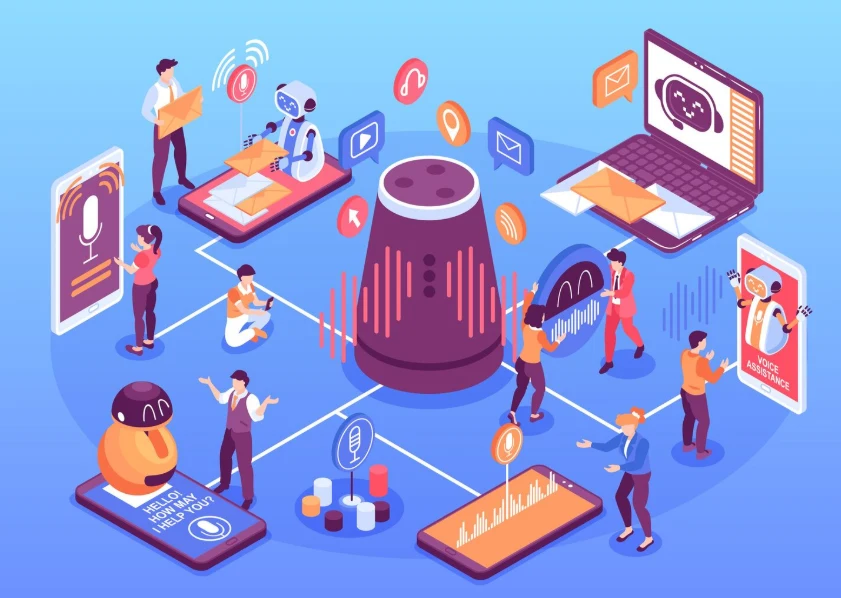
Proactive outreach eliminates predictable call categories by delivering information before customers need to ask. Analysis of contact center call logs consistently reveals that 30 to 40% of inbound calls request information organizations already possess: order status, appointment confirmations, payment due dates, and service updates. These calls represent pure waste because automated notifications can deliver the same information proactively at near-zero marginal cost.
High-Impact Notification Categories
Four notification types drive the majority of call reduction impact. Order and shipment tracking eliminates “Where’s my order?” calls through automated updates at key milestones: order confirmation, fulfillment processing, shipment with tracking link, and delivery confirmation. Appointment reminders sent at seven days, three days, and 24 hours before scheduled times reduce no-shows while preventing “When is my appointment?” inquiries. Payment notifications including due date reminders, payment confirmations, and failed payment alerts eliminate billing confusion calls. Service status updates for planned maintenance, outages, and resolutions prevent the call avalanche that occurs when customers discover service issues independently.
Multi-Channel Orchestration
Effective proactive communication requires sophisticated channel management beyond simple email blasts. Customers have distinct preferences for notification types and urgency levels. Transactional updates like payment confirmations may perform best via SMS for immediate visibility, while detailed shipment information might suit email with tracking links. Our implementation approach uses customer preference data and message urgency to determine optimal channel selection. Critical element: notifications must be actionable, not merely informative. “Your payment is due in 3 days [Pay Now]” with embedded payment link prevents calls, while “Your payment is due in 3 days” simply informs without resolution path.
Timing and Relevance
Notification effectiveness depends heavily on timing precision. Too early and customers forget or ignore; too late and they’ve already called. Payment reminders work best three to seven days before due dates based on industry patterns, though optimal timing varies by customer segment and payment history. Appointment reminders typically achieve peak effectiveness with the three-touch cadence: one week advance notice, three day reminder, and 24-hour final alert. Organizations should A/B test timing windows and measure impact on both call volume reduction and customer action rates to optimize their specific notification strategy.
Strategy 3: First Call Resolution (FCR) Optimization

First Call Resolution directly impacts call volume because unresolved issues generate repeat calls. Industry data shows that 20 to 30% of all contact center call volume stems from customers calling back about previously unresolved issues. Each 1% improvement in FCR can reduce overall call volume by 1 to 2% by eliminating these repeat contacts. Organizations achieving 80%+ FCR rates experience significantly lower call volumes compared to those at the industry average of 70 to 75%.
Root Causes of FCR Failures
Analysis of failed first call resolutions reveals consistent patterns across industries. Agent knowledge gaps account for the majority of failures, with 60% of failed FCR attempts attributed to agents’ inability to access correct data or information. Process inefficiencies force callbacks when agents lack authority to approve exceptions, systems require supervisor intervention for routine decisions, or workflows necessitate follow-up actions the agent cannot complete during initial contact. Technical limitations prevent resolution when agents must switch between disconnected systems, information silos prevent comprehensive customer views, or backend systems lack real-time data synchronization.
The FCR Improvement Framework
Systematic FCR enhancement requires addressing three core elements:
- Agent empowerment and training: Provide authority to resolve common issues without escalation, implement regular training that improves FCR by up to 25% according to industry benchmarks, and equip agents with decision-making frameworks for standard exception handling
- Unified desktop and tools: Deploy single-screen interfaces consolidating all necessary systems, integrate real-time AI agent assist that surfaces relevant knowledge articles and suggests optimal responses, and ensure instant access to complete customer history across all touchpoints
- Process simplification: Eliminate unnecessary approval requirements for routine resolutions, streamline workflows to enable same-call completion, and remove policies that force callbacks for issues agents could resolve immediately
Measurement and Optimization
Track FCR through post-call surveys asking “Was your issue resolved?” and call pattern analysis identifying customers who contact again within seven days about the same issue. Leading contact centers aim for 80% FCR rates as the 2025 benchmark, up from previous standards of 60 to 70%. Monitor FCR by call category to identify specific issue types requiring targeted improvement. Regular FCR analysis combined with agent coaching creates continuous improvement cycles that systematically reduce repeat call volume.
Strategy 4: Intelligent Call Routing & Root Cause Analysis
Intelligent routing optimizes unavoidable calls by connecting customers to the right resource immediately, while root cause analysis systematically eliminates recurring call drivers. Traditional routing based on simple rules generates 30 to 40% of calls requiring transfers, extending handle times and degrading customer experience. AI-powered routing combined with data-driven call driver identification enables organizations to both handle calls more efficiently and prevent entire categories from occurring.
AI-Powered Routing Intelligence
Modern routing systems analyze multiple data dimensions simultaneously to determine optimal agent assignment. Customer context including interaction history, sentiment from previous calls, and current issue urgency informs routing decisions. Agent profiling considers expertise areas, historical resolution rates for specific issue types, and real-time availability status. Predictive modeling matches customers to agents most likely to achieve first-call resolution based on patterns from thousands of previous interactions. Organizations implementing intelligent routing typically experience 15 to 25% reduction in call transfers and 10 to 20% improvement in average handle time.
Root Cause Analysis Methodology
Systematic call driver analysis identifies the underlying issues generating high call volumes. The process involves three phases:
- Call categorization and volume analysis: Tag all calls by primary reason and aggregate data monthly to identify top drivers, typically finding that 20% of call types generate 70 to 80% of total volume
- Deep-dive investigation: Examine high-volume categories to understand root causes rather than surface symptoms, distinguishing between calls caused by product issues, process gaps, communication failures, or policy confusion
- Impact assessment and prioritization: Rank improvement opportunities by volume impact (calls eliminated per month), implementation complexity, and cost-benefit ratio to focus resources on highest-return initiatives
From Insight to Action
Root cause findings must drive concrete operational changes. Product defects identified through call analysis should trigger engineering fixes or recall processes. Process gaps require workflow redesign to eliminate customer friction points. Communication failures indicate need for proactive notifications or clearer documentation. Policy confusion suggests requirement for simplified terms or better customer education. Organizations conducting quarterly root cause reviews and implementing systematic improvements report 10 to 20% ongoing call volume reduction as they address underlying issues rather than merely handling symptoms.
Strategy 5: Omnichannel Deflection & IVR Optimization
Strategic channel management reduces phone volume by making digital alternatives more effective and accessible than calling. Phone interactions cost contact centers significantly more than digital channels, creating strong economic incentive for intelligent deflection. Traditional IVR systems that frustrate 67% of consumers according to research drive abandonment rather than resolution. Modern conversational IVR and integrated omnichannel experiences enable customers to choose their preferred interaction method while naturally deflecting volume from expensive phone channels.
Channel Economics and Deflection Strategy
Understanding relative channel costs illuminates deflection opportunities. While specific costs vary by industry and implementation, phone interactions consistently represent the highest cost per contact. Live chat and messaging channels offer substantially lower costs while enabling agents to handle multiple conversations simultaneously, potentially increasing agent productivity by 200 to 300% compared to phone-only operations. Automated chat powered by AI delivers the lowest cost per interaction while providing instant response. Effective deflection strategy makes lower-cost channels the path of least resistance for appropriate inquiry types.
Conversational IVR Transformation
Legacy IVR systems with rigid menu trees and limited recognition capabilities create the friction that drives 28% of customers to abandon calls after just five minutes on hold. Conversational IVR powered by natural language processing enables customers to describe needs naturally rather than navigating numbered menus. The system should accomplish several functions:
- Intent recognition and routing: Understand customer needs from natural speech and route to appropriate resources or complete transactions autonomously
- Authentication without friction: Implement voice biometric verification enabling secure account access through natural conversation patterns
- Transaction completion: Process payments, schedule appointments, modify orders, and handle account updates without agent involvement
- Intelligent escalation: Transfer complete context to human agents when necessary, eliminating the customer frustration of repeating information after navigation
Omnichannel Integration Architecture
Successful deflection requires channel parity where customers can accomplish the same tasks through digital channels they currently complete via phone. Knowledge base accessibility through web and mobile ensures customers find answers without calling. Live chat and messaging options prominently displayed provide real-time alternatives to phone contact. Email support with rapid response times serves customers preferring asynchronous communication. Social media monitoring and response captures inquiries customers post publicly. Each channel must integrate with the same backend systems, maintaining consistent information and enabling seamless escalation when complexity requires it. Organizations implementing comprehensive omnichannel strategies report 20 to 35% phone volume reduction as customers naturally shift to their preferred interaction methods.
Conclusion
Call reduction represents far more than cost optimization. It’s strategic transformation that simultaneously decreases operational expenses, improves customer satisfaction, and enhances agent experience. Organizations achieving 30% volume reduction through the five strategies outlined don’t simply handle fewer calls; they fundamentally reshape customer engagement around prevention, proactivity, and intelligent automation.
The implementation sequence matters significantly. Begin with AI-powered self-service for your highest-volume, lowest-complexity inquiries to achieve immediate impact with minimal risk. Layer proactive communication to eliminate predictable call categories before they occur. Optimize First Call Resolution to break the repeat contact cycle consuming 20 to 30% of your current volume. Deploy intelligent routing to maximize efficiency for unavoidable calls. Finally, implement omnichannel deflection and conversational IVR to provide customers with their preferred interaction methods.
Success requires executive commitment to sustained transformation rather than tactical fixes. The technology exists and is proven. IBM research documenting 80% routine question resolution via chatbots and telecommunications providers achieving 30% volume reduction demonstrate that dramatic results are achievable, not aspirational. The differentiator is implementation quality and organizational commitment to customer-centric process redesign.
Start with baseline measurement: current call volume by category, FCR rates, channel distribution, and cost per interaction. Establish realistic targets based on your specific mix of inquiry types and customer demographics. Deploy incrementally, measure rigorously, and iterate based on data. Organizations that approach call reduction strategically rather than tactically build sustainable competitive advantages that compound over time through improved customer relationships, operational efficiency, and market differentiation.
Ready to reduce your contact center call volume by 30% or more? Mindhunters.ai delivers intelligent sales and customer engagement solutions purpose-built for call reduction. Our conversational AI platform combines advanced speech recognition, natural language understanding, and predictive routing to deflect routine inquiries, enable proactive communication, and optimize agent interactions. Contact us today to explore how our proven strategies can transform your contact center economics while elevating customer experience.
FaQ's
What are call reduction strategies?
They are methods to minimize unnecessary calls in contact centers using self-service, automation, and proactive support.
How does AI reduce call volume?
AI handles repetitive tasks like FAQs, reminders, and updates, reducing the need for human intervention.
How quickly can we realistically reduce call volume by 30%?
Implementation timeline varies by organizational readiness and strategy selection. AI-powered self-service and proactive communication can deliver 10 to 15% volume reduction within 60 to 90 days of deployment for high-volume inquiry categories. FCR optimization and intelligent routing require 90 to 120 days for measurable impact as training takes effect and systems integrate. Achieving sustained 30% reduction typically requires 6 to 12 months of phased implementation across multiple strategies. Organizations with existing digital infrastructure and clean data accelerate faster, while those starting from legacy systems require longer transformation periods.
Will call reduction strategies hurt customer satisfaction scores?
Properly implemented call reduction improves customer satisfaction rather than degrading it. Research shows 81% of customers prefer self-service when it works effectively, and 90% expect immediate responses that automation delivers better than queued phone systems. The critical factor is resolution quality, not deflection rate. Self-service must actually solve customer problems, not frustrate them into calling anyway. Proactive communication demonstrates care and keeps customers informed. FCR optimization ensures issues resolve completely on first contact. When strategies prioritize customer needs over volume metrics, satisfaction improves alongside volume reduction.
Which industries achieve the best results from call reduction strategies?
Industries with high volumes of routine, predictable inquiries achieve fastest results. E-commerce and retail see dramatic impact from order status automation and proactive shipment notifications. Financial services benefit significantly from account inquiry automation and proactive payment reminders. Telecommunications providers report 30% volume reduction from AI implementation handling service status and billing questions. Healthcare achieves strong results from appointment scheduling automation and prescription refill systems. Industries with highly complex, variable inquiries requiring extensive investigation see more modest volume reduction but still benefit from FCR optimization and intelligent routing.
How does Mindhunters.ai help with call reduction?
It combines conversational AI, automation, and analytics to minimize call volume and improve service.
Is call routing part of call reduction strategies?
Yes. Intelligent routing reduces call handling times and prevents unnecessary transfers.
Will reducing calls lead to agent downsizing?
Not necessarily. It allows agents to focus on complex, high-value interactions rather than repetitive tasks.

Volkan Demir is the Co-Founder of Mindhunters.ai – Intelligent Sales & Customer Engagement, a platform that leverages conversational AI to transform how businesses sell and support at scale.

